The soft skill crisis costing healthcare billions
The soft skill crisis costing healthcare billions
Show Notes
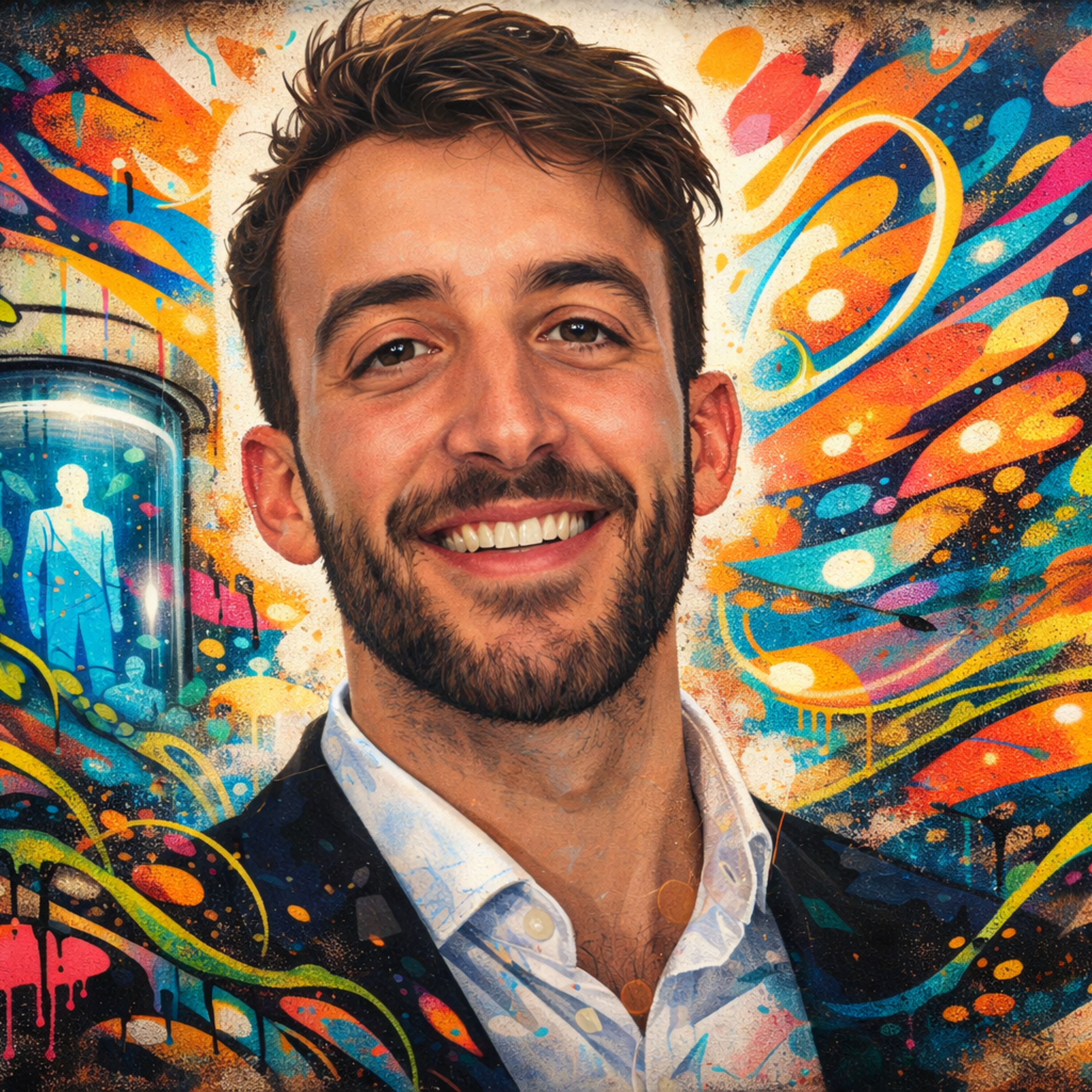
There's a moment in every founder's journey where the market stops being theoretical and becomes deeply personal. For Lucas Consoli, co-founder of EmpathEQ, that moment happened in a hospital room, watching his mother in an induced coma for two weeks, his emotional state entirely at the mercy of whichever nurse happened to be on shift. Some had zero empathy. Some brought calm into chaos. That gap, that wildly inconsistent human experience inside one of the most high-stakes environments on earth, became the foundation for everything EmpathEQ is building.
Lucas grew up in Argentina, a country he describes as one that forges entrepreneurs not through comfort but through necessity. When institutions can't be trusted, you build your own moral compass. You develop a muscle for solving problems that most people would walk away from. He took that muscle to Berlin, co-founded two companies without speaking German, met his American wife, and eventually landed in Cincinnati with a green card, a vision, and a co-founder, Alex, who had five exits to his name and the capital to fund the first six months of the dream.
The problem EmpathEQ is solving is enormous. Nursing burnout is at crisis levels. A significant portion of the workforce is leaving the profession. And the root cause isn't clinical incompetence. It's emotional overload from interactions that nobody ever trained them to handle. Angry family members. Anxious patients. Charged situations that escalate in seconds. The traditional solution has been to hire an actor, schedule 200 students, give each of them three minutes of practice once a year, and hope it sticks. EmpathEQ blew that model up entirely.
Their platform puts nurses inside AI-powered simulations where a digital patient or family member reacts in real time to the nurse's verbal language, tone, facial expressions, and body posture. The AI orchestrator reads all of those signals and selects the next scene from a library of pre-rendered cinematic moments, choosing the response the patient would realistically give based on how the nurse is showing up. Afterwards, the nurse gets a full feedback report. Where they looked. How they sounded. Whether they validated emotions or bulldozed through them. It's a driving range for human connection.
The tech stack is a hybrid of AI and cinematography because fully generative real-time video isn't there yet. Rather than wait for the technology to catch up, Lucas and his team engineered around the constraint, and the result is something hospitals and nursing schools are lining up to use. Sixteen institutions are already collaborating. None have said no. The next step is getting them to pay, and the pre-seed round of $600K is still open for one strategic partner, ideally from health systems, nursing staffing agencies, or higher education.
The conversation also went deep on the philosophy of building, the danger of chasing exits without passion, the cognitive overload epidemic in the founder community, and why studying sociology or psychology might be the single smartest move a college freshman could make in the age of AI.
Lucas isn't just building a company. He's building a case that empathy is a trainable skill, that soft skills deserve hard infrastructure, and that the healthcare system's most urgent problem isn't a drug or a device. It's the conversation in the hallway.
https://www.linkedin.com/in/lucas-donato-consoli/
https://www.linkedin.com/in/estesryan/